



29 May The Best Modern Writers Who Didn’t Win the Nobel Prize
Diego Moldes, Madrid, 2014. Article revised in 2026.
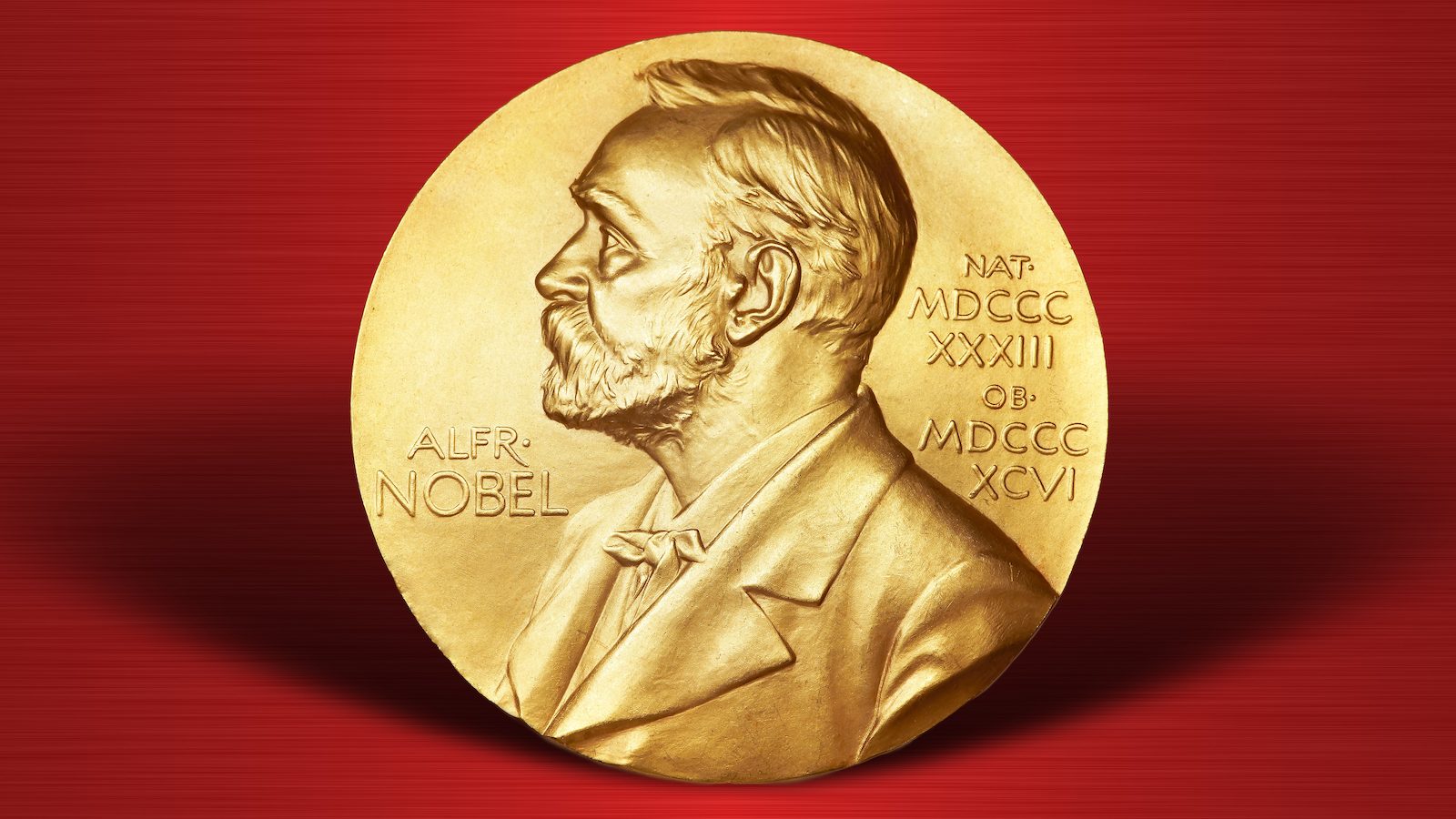
When one reviews the list of winners of the Nobel Prize in Literature, awarded by the Swedish Academy to writers who stand out for their contributions to the field of literature, as stipulated in his will, written a year before his death, by the chemist and engineer Alfred Nobel (1833-1896), many things catch one’s attention.
One is Eurocentrism, especially in the first half of the 20th century. Another might be the disproportionate representation by country: it’s a bad joke that Sweden has more laureates than the literature of countries like Spain, Italy, Russia, or Poland. The overwhelming majority of men over women is also striking today, but this has a socio-historical explanation, which is being addressed in recent times. It’s striking, but it follows the logic of the global distribution of books, that more than 20% of the award winners wrote in English, followed by French (13%), German (10%), Spanish (9.8%), and Swedish (6%, «a clear case of favoritism,» as one critic wrote).
111 WRITERS HAVE BEEN AWARDED THE PRIZE BETWEEN 1901 AND 2014.
(Note in 2026: Since the award’s inception in 1901, the Nobel Prize in Literature has been awarded 118 times, recognizing a total of 122 authors worldwide. There were four shared prizes and seven years without a prize. How can this be, the reader wonders? Yes, the numbers don’t add up. But the explanation is simple: the Nobel Prize was not awarded in the years 1914, 1918, 1935, 1940, 1941, 1942, and 1943. Still not adding up? Well, on four occasions, the Nobel Prize in Literature was awarded to two people in the same year (1904, 1917, 1966, and 1974). Perhaps they couldn’t agree.)
In total, the following writers have won: They have been expressed in 25 different languages. Often, by awarding a writer the prize, the intention has been to honor an entire language whose international presence is very limited or even minimal. This is the case with José Saramago (Portuguese), Ohmar Pamuk (Turkish), Imre Kertész (Hungarian), Naghib Mahfouz (Arabic), Jaroslav Seifert (Czech), Isaac Basevish Singer (Yiddish), Shmuel Yosef Agnon (Hebrew), Ivo Andrić (Serbo-Croatian), or the early case of Frédéric Mistral (Occitan), awarded in 1904. Without wishing to diminish the merits of the laureates, it is clear that in not a few Nobel Prize decisions for Literature there is a whiff of politics, more than of culture or literature. Even cronyism, as in the case of the obscure Icelander Laxness—without intending to detract from his work, of course.
In their early years, they frequently missed the mark and seemed more like a «prize among friends,» since the number of non-universal authors, read almost exclusively in their countries of origin, is majority. Let’s see: Bjørnstjerne Bjørnson (1832-1910), Theodor Mommsen (1817-1903), Giosuè Carducci (1835-1907), Rudolf Christoph Eucken (1846-1926), Verner von Heidenstam (1859-1940), Karl Adolph Gjellerup(1857-1919), Henrik Pontoppidan (1857-1943), Sigrid Undset (1882-1949), Erik Axel Karlfeldt (1864-1931), Frans Eemil Sillanpää (1888-1939), Johannes Vilhelm Jensen (1873-1950), Halldór Laxness (1902-1998). Does anyone know them? Does anyone remember reading them? Are their books being translated today, less than a century later? The answer is clear.
But we don’t need to go back to the first third of the 20th century. Let’s be honest. Really. Most readers hadn’t heard of the Chinese writer Mo Yan (winner in 2012), the Swedish poet Tomas Tranströmer (2011), the Caribbean native of Saint Lucia, Derek Walcott (1992), or the Nigerian writer Wole Soyinka (1986). I’ll be rightly criticized for saying that the Nobel Prize isn’t a popularity contest, but a competition of literary quality. And that’s true. I won’t argue with that. But the Nobel Prize is also a propaganda machine, a colossal publicity springboard.
HOW MANY OF US HAD READ HERTA MÜLLER, NAIPAUL, SINGJIAN, OR DARIO FO BEFORE THEY WON THE NOBEL PRIZE? LET’S BE HONEST, PLEASE.
Among the literary geniuses who have won the Nobel Prize are a good number of writers whose books we love: Kipling, Tagore, Thomas Mann, Pirandello, Hesse, Yeats, T.S. Eliot, Faulkner, Gide, Camus, Steinbeck, Beckett, Neruda, Bellow, Canetti, García Márquez, William Golding, and Octavio Paz.
Even philosophers have won it; there’s Russell, Bergson, and Sartre. Why not Wittgenstein or Heidegger? those familiar with modern philosophy might ask. I don’t know. I doubt they know at the Swedish Academy.
But the crux of the matter, the heart of the matter, if you will, is the list of geniuses of modern literature who haven’t won the Nobel Prize. Let us think of Tolstoy, the greatest novelist of the last quarter of the 19th century, or of the triumvirate formed by Kafka, Proust, and Joyce, considered by specialized critics, almost unanimously, as the greatest writers of the 20th century: absolute peaks of modern prose.
But the crux of the matter, the heart of the issue, if you will, is the list of geniuses of modern literature who haven’t won the Nobel Prize. Consider Tolstoy, the greatest novelist of the last quarter of the 19th century, or the triumvirate of Kafka, Proust, and Joyce, considered by critics, almost unanimously, to be the greatest writers of the 20th century: absolute pinnacles of modern prose.
The Swedish Academy seems to live in a bubble when it penalizes genre fiction, and especially the two great contributions of the 20th century to the art of the novel: crime fiction and science fiction/fantasy. Where are Chandler, Hammett, or Cain, to name the «fathers» of American noir? Nor their European counterparts, Chesterton, or Simenon. And the great masters of science fiction, such as Arthur C. Clarke, Asimov, Lem, or Ballard? Even the great contributions of Huxley—Brave New World—and Orwell—1984—are hopelessly ignored.
They also seem to ignore, or worse, despise, for more than a century, the most avant-garde literature, not to mention experimental literature; thus, there is no room for such innovative poets as Pessoa, Lorca, Alberti, Breton, Cocteau, Cavafy, Sylvia Plath, or Celan, nor for novelists who renewed the genre with unparalleled audacity, such as Gadda, Roussel, Dos Passos, Bernhard, or our beloved Georges Perec. But don’t think it’s because they preferred the old-fashioned, 19th-century novel, because Conrad, Thomas Hardy, Henry James, Pérez Galdós, or Pío Baroja weren’t even considered candidates in the first quarter of the 20th century (when authors who weren’t considered first-rate won). And this tendency to overlook sophisticated novelists who valued language and respected traditional novelistic forms continued into the late 20th and early 21st centuries, failing to award prizes to L. Durrell, Mújica Láinez, Robertson Davies, and, above all, ignoring even the great Julien Gracq (who lived to be 97, but even so…).
And what about theater? Which playwrights were awarded the prize? It suffices to mention those ignored by the Nobel: Ibsen, Chekhov, Valle-Inclán, Brecht, Ionesco, Thornton Wilder, Arthur Miller. No comment.
I also suspect that they don’t have much appreciation for the great contemporary Italian novel (I want to think that’s the case, and not that it’s pure ignorance, which would be even worse), because otherwise it’s inexplicable that Giosuè Carducci (1906), Grazia Deledda (1926), Salvatore Quasimodo (1959), and Eugenio Montale (1975) won it, while the greatest Italian writers—Italo Svevo, D’Annunzio, Gadda, Primo Levi, Pavese, Moravia, Giorgio Bassani, or Italo Calvino—didn’t. They did, at least, give it to the sharp-witted Pirandello (and much later to Dario Fo), settling a double debt: with Italy and with dramatic art. (The Swedes are forgiven for omitting Lampedusa, since he died in 1957 and *The Leopard* was published posthumously in 1958.)
Sometimes it seems they’re late to the party, awarding the prize to a specific language to compensate for past oversights. That’s what they thought in 1963 with Yorgos Seferis and in 1979 with Odysseas Elytis. By awarding these two Greek poets, they wanted to rectify the absence of Cavafy, by far the most important writer in modern Greek.
What we no longer know whether to laugh or cry about is that they overlooked and failed to recognize our greatest poetic luminaries, pinnacles of Spanish poetry like Rubén Darío and Lorca, or our finest playwright, Valle-Inclán (they never even considered Buero Vallejo), or the master Borges, and yet, as early as 1904, they awarded it to José Echegaray! “In recognition of the numerous and brilliant compositions that, in an individual and original way, have revived the grand traditions of Spanish drama,” and to Jacinto Benavente “for the felicitous way in which he has continued the illustrious traditions of Spanish drama.” As some critic might say, it makes me laugh.
And here, with your permission, one can choose to: a) turn red with embarrassment, like a tomato; b) be indignant (I don’t advise getting angry, it’s pointless); c) burst out laughing at the blindness of those “supposed Swedish experts in literature.”
————————– Postscript 2026 ——————————————–
Between 1901 and 2026, 122 people have been awarded the Nobel Prize (not 126, because no Nobel Prizes were awarded during the central years of World War II, 1940, 1941, 1942, and 1943). Of these, 104 were men and 19 were women. The country with the most Nobel Prize-winning writers is France, with 16. The most frequently awarded language is English, with 29 laureates, which is actually 32 because there are three multilingual writers.
With this in mind, I propose a comparative exercise for the reader of these lines. First, read the list of the 122 Nobel Prize-winning writers by clicking on this link.
Then compare it with your own mental list of those who were not awarded the prize. Or with my own list. Here is a list of those deceased writers who, having lived in the 20th century, did not win the Nobel Prize. Judge for yourselves, and let each bear their own burden. You only need to be a good reader to realize this.
LIST OF 122 GREAT WRITERS WHO DID NOT WIN THE NOBEL PRIZE
- Jules Verne (1828-1905), French.
- Leo Tolstoy (1828-1910), Russian.
- Henrik Ibsen (1828-1906), Norwegian.
- Mark Twain (1835-1910), American.
- Thomas Hardy (1840-1928), English.
- Antonio Fogazzaro (1842-1911), Italian.
- Benito Pérez Galdós (1843-1920), Spanish.
- Henry James (1843-1916), American-British.
- Bram Stoker (1847-1912), Irish.
- Joseph Conrad (1857-1924), Polish/British.
- Arthur Conan Doyle (1859-1930), Scottish.
- Anton Chekhov (1860-1904), Russian.
- Italo Svevo (1861-1928), Italian.
- Edith Wharton (1862-1937), American.
- Gabriele D’Annunzio (1863-1938), Italian.
- Constantine Cavafy (1863-1933), Egyptian-British-Greek.
- Ramón María del Valle-Inclán (1866-1936), Spanish.
- Rubén Darío (1867-1916), Nicaraguan.
- Natsume Soseki (1867-1916), Japanese.
- Marcel Schwob (1867-1905), French.
- Maxim Gorky (1868-1936), Russian.
- Marcel Proust (1871-1922), French.
- Pío Baroja (1872-1956), Spanish.
- Miklós Bánffy (1873-1950).
- Gilbert Keith Chesterton (1874-1936), British.
- Rainer Maria Rilke (1875-1926), Bohemian/Austro-Hungarian/Austrian.
- Antonio Machado (1875-1939), Spanish.
- Jack London (1876-1916), American.
- Raymond Roussel (1877-1933), French.
- Alfred Döblin (1878-1957), German-French.
- Robert Walser (1878-1956), Swiss.
- E. M. Forster (1879–1970), English.
- Stefan Zweig (1881–1942), Austro-Hungarian/Austrian.
- James Joyce (1882–1941), Irish.
- Virginia Woolf (1882–1941), English.
- Franz Kafka (1883–1924), Czech, German-speaking.
- D. H. Lawrence (1885–1930), British.
- Raymond Chandler (1888–1959), American.
- Fernando Pessoa (1888–1935), Portuguese.
- Jean Cocteau (1889–1963), French.
- Ludwig Wittgenstein (1889–1951), Austro-Hungarian/Austrian-British.
- Mikhail Bulgakov (1891–1940), Russian-Ukrainian.
- Henry Miller (1891–1980), American.
- Bruno Schulz (1892–1942), Austro-Hungarian/Polish.
- Carlo Emilio Gadda (1893–1973), Italian.
- Dashiell Hammett (1894–1961), American.
- Aldous Huxley (1894–1963), British.
- Joseph Roth (1894–1939), Austro-Hungarian/Austrian.
- Albert Cohen (1895–1981), Swiss.
- Jean Giono (1895–1970), French.
- André Breton (1896–1966), French.
- Giuseppe Tomasi di Lampedusa (1896–1957), Italian.
- John Dos Passos (1896–1960), American.
- Francis Scott Fitzgerald (1896–1940), American.
- Federico García Lorca (1898–1936), Spanish.
- Bertolt Brecht (1898–1956), German.
- Jorge Luis Borges (1899–1986), Argentinian.
- Vladimir Nabokov (1899–1977), Russian-American.
- Elizabeth Bowen (1899–1972), Anglo-Irish.
- Rafael Alberti (1902–1999), Spanish.
- Felisberto Hernández (1902–1964), Uruguayan.
- Marguerite Yourcenar (1903-1987), French.
- George Orwell (1903-1950), British.
- Georges Simenon (1903-1989), French.
- Alejo Carpentier (1904-1980), Cuban.
- Witold Gombrowicz (1904-1969), Polish.
- Vasili Grossman (1905-1964), Russian-Ukrainian.
- Arturo Uslar Pietri (1906-2001), Venezuelan.
- Alberto Moravia (1907-1990), Italian.
- Cesare Pavese (1908-1950), Italian.
- Eugène Ionesco (1909-1994), Romanian-French.
- Malcolm Lowry (1909-1957), American.
- Eudora Welty (1909-2001), American.
- Julien Gracq (1910-2007), French.
- Manuel Mújica Láinez (1910-1984), Argentinian.
- Gonzalo Torrente Ballester (1910-1999), Spanish.
- Emil Cioran (1911-1995), Romanian/French.
- Álvaro Cunqueiro (1911-1981), Spanish (in Galician).
- Ernesto Sábato (1911-2011), Argentinian.
- Tennessee Williams (1911-1983), American.
- Jorge Amado (1912-2001), Brazilian.
- Lawrence Durrell (1912-1990), British.
- Robertson Davies (1913-1991), Canadian.
- Juan Carlos Onetti (1914–1994), Uruguayan.
- Julio Cortázar (1914–1984), Argentine-French.
- Adolfo Bioy Casares (1914–1989), Argentine.
- Romain Gary (1914–1980), Russian-Lithuanian-French.
- Bohumil Hrabal (1914–1997), Czech.
- Arthur Miller (1915–2005), American.
- Arthur C. Clarke (1917–2008), British.
- Carson McCullers (1917–1967), American.
- Juan Rulfo (1917–1986), Mexican.
- Primo Levi (1919–1987), Italian.
- Iris Murdoch (1919–1999), Irish.
- J. D. Salinger (1919-2010), American.
- Paul Celan (1920-1970), Romanian-French (in German).
- Isaac Asimov (1920-1992), Russian-American.
- Miguel Delibes (1920-2010), Spanish.
- Clarice Lispector (1920-1977), Ukrainian-Brazilian.
- Yukio Mishima (1920-1970), Japanese.
- Idea Vilariño (1920-2009), Uruguayan.
- Stanislaw Lem (1921-2006), Polish.
- Patricia Highsmith (1921-1995).
- Italo Calvino (1923-1985), Italian.
- Truman Capote (1924-1984), American.
- John Fowles (1926-2005), English.
- Carlos Fuentes (1928–2012), Mexican.
- Cynthia Ozick (1928–), American.
- Milan Kundera (1929–2023), Czechoslovakian/French.
- Milorad Pavić (1929–2009), Yugoslavian/Serbian.
- Juan Gelman (1930–2014), Argentinian.
- Thomas Bernhard (1931–1989), Austrian.
- John le Carré (1931–2020), British.
- Umberto Eco (1932–2016), Italian.
- Philip Roth (1933–2018), American.
- Danilo Kiš (1935–1989), Serbian-Yugoslavian.
- Georges Perec (1936–1982), French.
- Ismail Kadare (1936–2024), Albanian.
- Alejandra Pizarnik (1936-1972), Argentinian.
- Amos Oz (1939-2018), Israeli.
- Réjean Ducharme (1941-2017), Canadian.
- Paul Auster (1947-2024), American.
Overwhelming
In recent years, several first-rate novelists have passed away, destined to become immortal, yet the Swedish Academy did not award them the Nobel Prize. These include Julien Gracq, Miguel Delibes, Carlos Fuentes, Sábato, Gelman, Mutis, Oz, Roth, Auster, the soon-to-be-deceased Roberto Bolaño (who we have no doubt would have received it had he not died at just 50 years old), and J. D. Salinger, the author of the most widely read American novel of the 20th century: The Catcher in the Rye.
Two questions remain:
Have I missed any truly brilliant writers?
Norman Manea, Haruki Murakami, Joyce Carol Oates, Thomas Pynchon, Don De Lillo, Cormac McCarthy, Enrique Vila-Matas, Theodor Kallifatides, Alejandro Jodorowsky, Cynthia Ozick, Ana Blandiana, Elliot Weinberger, Antonio Muñoz-Molina, Mircea Cărtărescu. Which list would these perennial Nobel Prize candidates prefer to be on in posterity?
I have no doubt. What about you?
I think it’s crystal clear that the list of Nobel Prize winners, from 1901 to 2024, is significantly shorter than the list of non-winners. In some cases, much shorter. Furthermore, the most representative writers of the modern world in novels, plays, poetry, and essays are not represented on the Nobel Prize list! Not Kafka, not Tolstoy, not Proust, not Joyce, not Valle-Inclán, not poets like Rilke, not Pessoa, not Lorca, not Borges… In short.
Time, as always, has been the best judge.
Perhaps in literature, in art, there shouldn’t be competition—not for prizes, not for anything—because, as my dear friend Alejandro Jodorowsky told me one day at dinner, «art isn’t a Miss Universe pageant.»

No hay comentarios